 als
alsMenu
News and Events
Students of Baku State University (BSU) are actively engaged in scientific research, contributing to innovation-driven education and strengthening the integration of education, science, and industry. BSU’s strategic vision focuses on transforming into a “Research University” by fostering research skills among students, expanding international cooperation, implementing student–faculty exchange programs with leading global universities, applying scientific results in industry, and contributing to the solution of the country’s socio-economic challenges.
Today, BSU students regularly present papers at scientific seminars and conferences and are involved in research projects across various fields. Information on newly obtained scientific results is integrated into the teaching process. This education–science–research ecosystem enables students to develop directly within a research environment and supports the emergence of new scientific schools in priority research areas.
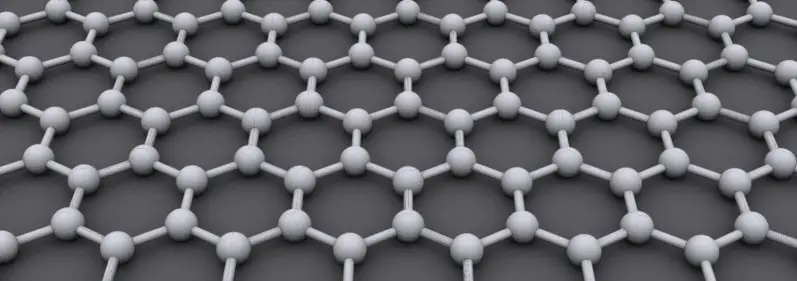
Master’s students of the SABAH groups, second-year students Lala Isayeva and Rashida Huseynzade, actively participated in research conducted at the Nano-Research Scientific Laboratory of the BSU Center of Excellence for Research, Development and Innovation. The research focused on investigating the effects of graphene oxide (GO) on the structural, thermal, optical, and electrical properties of a butadiene–nitrile rubber (NBR)-based composite material.
Their co-authored article entitled “The role of hydrogen-bonded interphase in achieving optimal performance of nitrile-butadiene rubber/graphene oxide nanocomposites” was published in the Q1-ranked Frontiers in Chemistry journal indexed in the Scopus database.
In the study, graphene oxide was synthesized using a modified Hummers method, and the NBR/GO system was prepared with different filler concentrations via solution coagulation followed by sulfur vulcanization. The results demonstrated that the incorporation of 1.0 parts by weight of graphene oxide into the system ensures the optimal formation of mechanical and dielectric properties. Considering the wide application of NBR as an oil-resistant elastomer, the obtained findings are of practical significance for the application of these composite materials in the oil industry.
SDG 4 (Quality Education), SDG 9 (Industry, Innovation and Infrastructure)