 als
alsMenu
News and Events
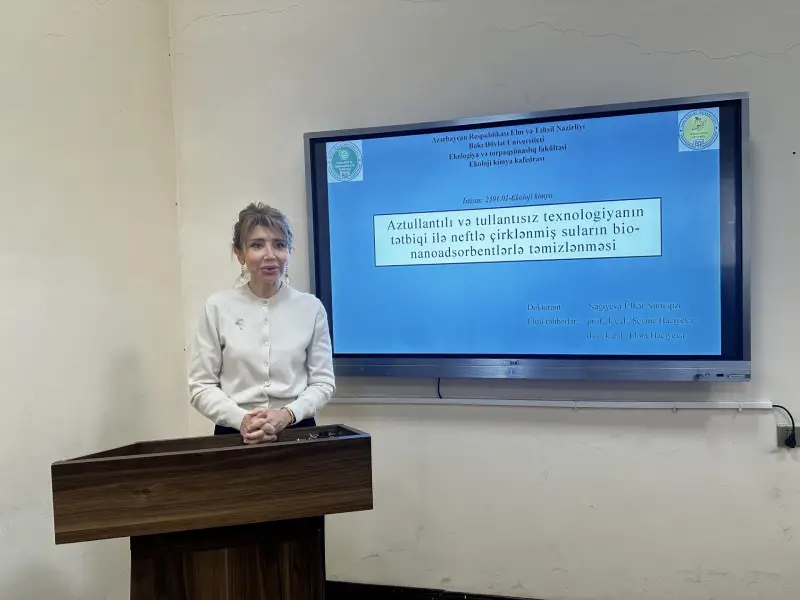
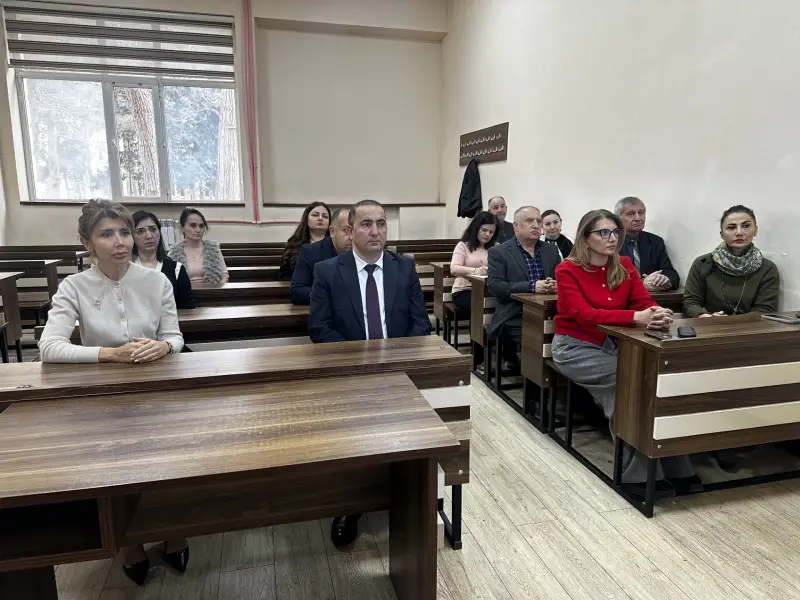
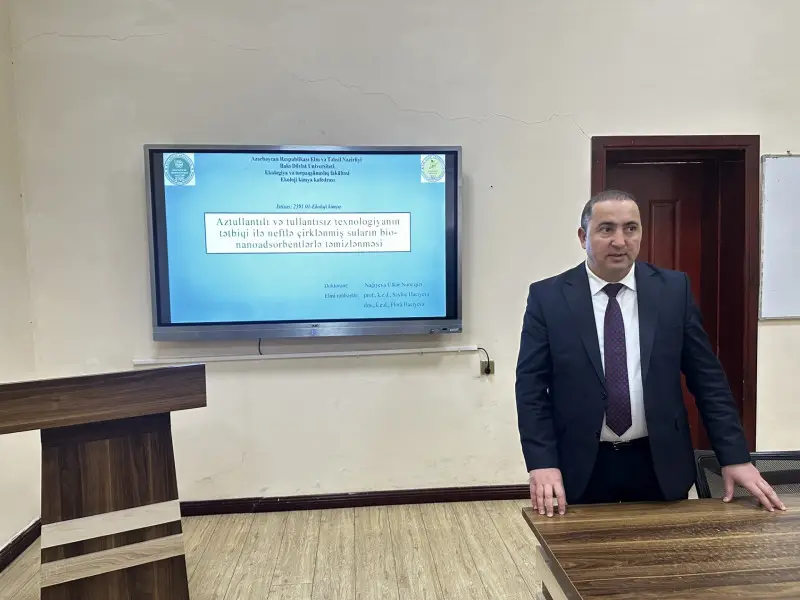
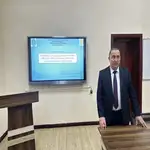
At Baku State University, a scientific seminar was held at the Faculty of Ecology and Soil Science as part of events dedicated to Science Day in Azerbaijan.
During the seminar, doctoral researcher Ulker Nagiyeva from the Department of Ecological Chemistry delivered a presentation on “Purification of oil-contaminated water using bio-nanoadsorbents through low-waste and zero-waste technologies.”
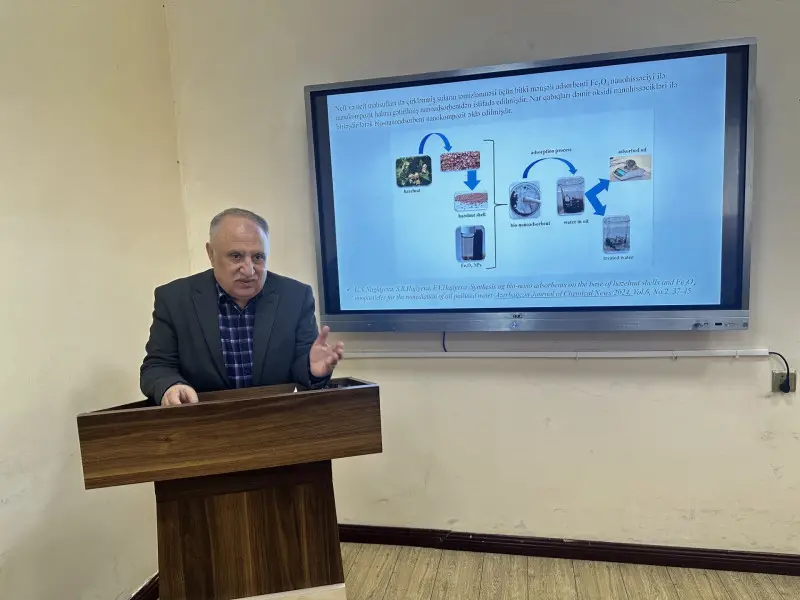
The presentation highlighted that water pollution caused by oil and petroleum products remains a serious environmental challenge. Various treatment methods were reviewed, with particular emphasis on the synthesis and investigation of new bio-nanoadsorbents based on hazelnut shells and Fe₃O₄ nanoparticles for oil removal.
It was noted that hazelnut shells, as a natural plant-based waste material widely available in Azerbaijan, offer significant potential for sustainable utilization. Fe₃O₄ nanoparticles, used as nanofillers, are cost-effective, non-toxic, and exhibit strong superparamagnetic and high adsorption properties.
The study covered the preparation of these bio-nanoadsorbents and their application in treating oil-contaminated water, along with detailed analysis of adsorption kinetics. The purification efficiency was evaluated under various technological conditions, including pH levels, adsorbent dosage, nanoparticle concentration, oil concentration, and reaction temperature.
It was emphasized that superparamagnetic Fe₃O₄ nanoparticles enable efficient collection of oil from water surfaces even under low-intensity magnetic fields and allow regeneration and reuse of the adsorbent. The adsorption capacity of these nanoparticles was also extensively discussed.
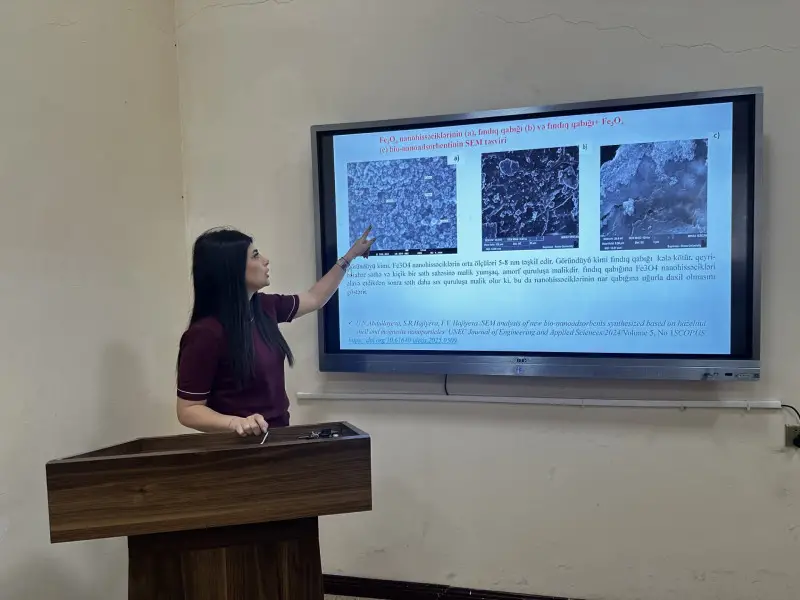
The structural properties of the synthesized bio-nanoadsorbents were analyzed using advanced techniques such as scanning electron microscopy, infrared spectroscopy, and thermogravimetric analysis, highlighting the relationship between structure and performance.
The importance of implementing low-waste and zero-waste technologies in modern environmental protection was underscored. The research is conducted under the supervision of Sevinc Hajiyeva and Flora Hajiyeva.
SDG 6 (Clean Water and Sanitation), SDG 9 (Industry, Innovation and Infrastructure), SDG 12 (Responsible Consumption and Production), SDG 13 (Climate Action)