 als
alsMenu
News and Events
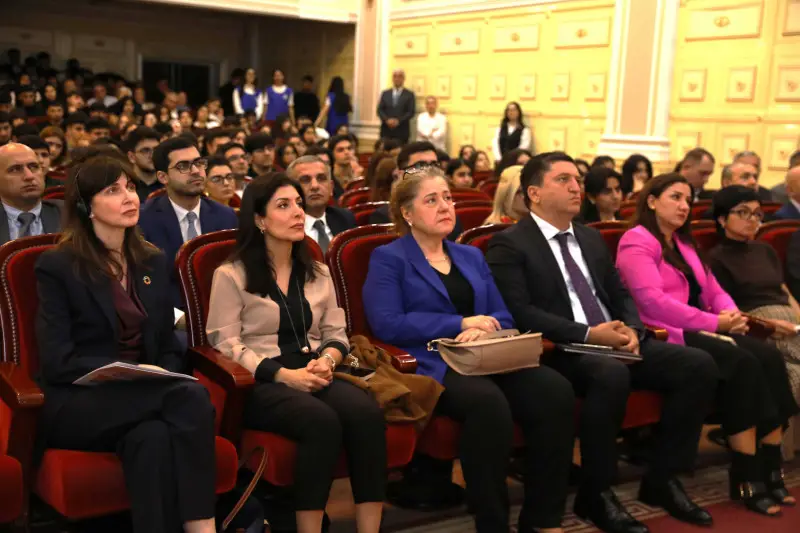
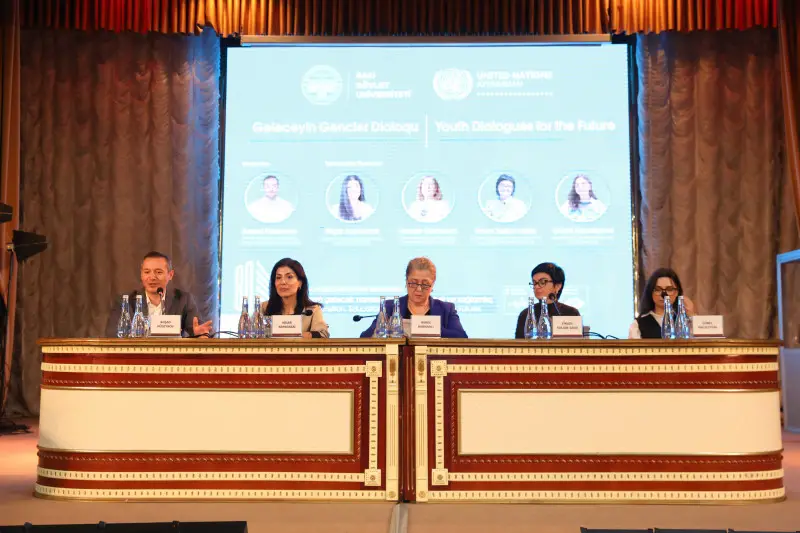
An event titled “Youth Dialogue of the Future”, dedicated to the 80th anniversary of the United Nations (UN), was held at Baku State University (BSU).
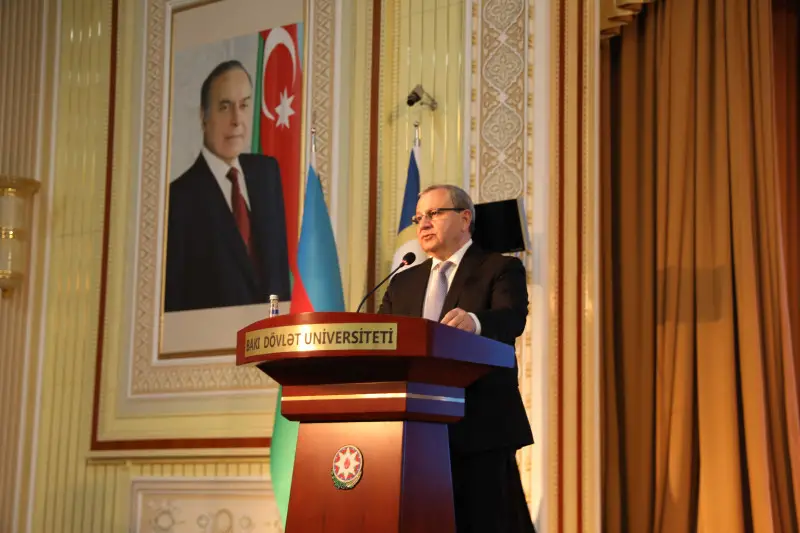
Speaking at the opening ceremony, BSU Rector Elchin Babayev noted that since its establishment, the UN has served the global community as a symbol of international peace, security, human rights, and sustainable development. He emphasized that from the early years of Azerbaijan’s independence, the country’s foreign policy—defined by National Leader Heydar Aliyev—identified the development of multifaceted cooperation with the UN based on principles of justice as a key priority. This policy is successfully continued today by President of the Republic of Azerbaijan Ilham Aliyev, strengthening Azerbaijan’s international standing in humanitarian, scientific, climate, and sustainable development fields.
The Rector highlighted that cooperation between Azerbaijan and the UN is developing across peace and security, sustainable development, and human rights. Azerbaijan actively implements projects aligned with the UN Sustainable Development Goals (SDGs) and participates in socio-economic development, humanitarian assistance, and scientific initiatives. Baku State University supports this strategic policy through education, research, and public engagement. University-led initiatives engage students and young researchers in international discussions and prepare them to address global challenges.
Within the frameworks of “Model UN” and “Youth Sustainable Development Forums,” students gain insight into UN structures, participate in simulated discussions on humanitarian and environmental issues, and experience real decision-making processes. The Baku Climate Science Conference, organized by the University within the framework of COP29, featured projects by BSU scholars and students aligned with UN goals on climate change, environmental sustainability, and sustainable development. The event strengthened Azerbaijan–UN cooperation and provided young researchers with valuable international experience.
Elchin Babayev underlined that in recent years BSU has systematically strengthened its activities in line with the SDGs. As evidence, the University advanced significantly in the 2025 Times Higher Education (THE) rankings, rising to the 401–600 range from its previous position of 1001–1500. This achievement reflects BSU’s commitment to sustainable development, social responsibility, and global partnership. The University has been globally recognized for projects covering 15 of the 17 SDGs and ranks among the world’s top 100 universities in four areas: No Poverty, Quality Education, Gender Equality, and Reduced Inequalities.
Additionally, according to the QS World University Rankings: Sustainability 2025, officially presented in Baku on November 18, 2024, within the framework of COP29, BSU achieved a leading position in Azerbaijan. The University advanced by more than 345 places compared to the previous year, ranking within the 941–950 global range and becoming the only Azerbaijani higher education institution in the global Top 1000. These indicators demonstrate BSU’s growing international reputation in climate action, innovation, research, and social engagement. The Rector also noted that these achievements result from initiatives such as green campus projects, including “EcoSpace,” “Student Space,” and the “EcoEnergy” alternative energy station, as well as ongoing research in climate diplomacy and social inclusion, carried out in close cooperation with the UN Resident Coordinator’s Office in Azerbaijan.
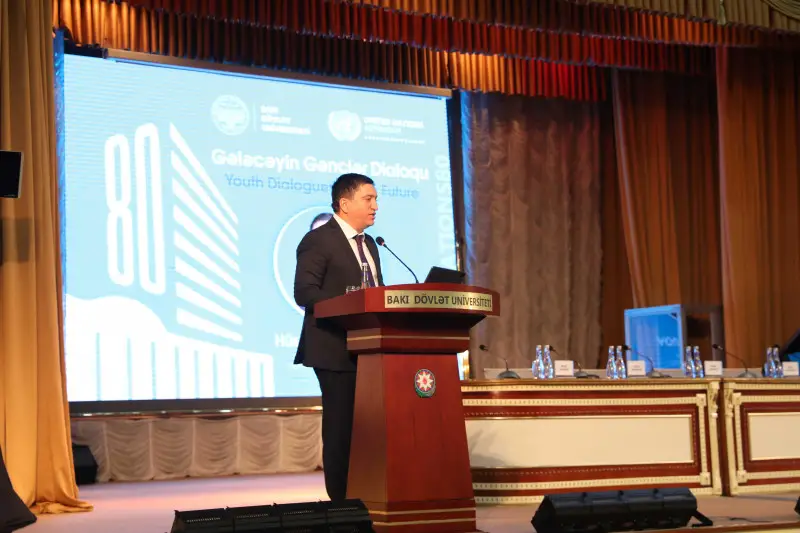
Vladanka Andreeva, UN Resident Coordinator in Azerbaijan, expressed gratitude for hosting the UN’s 80th anniversary event at BSU, a university that has made significant contributions to Azerbaijan’s national and scientific development. She stated that throughout its history, the UN has worked to preserve peace, promote cooperation among nations, and address global challenges. She emphasized that the 17 Sustainable Development Goals represent a shared global agenda for the future, covering critical issues such as green energy, poverty eradication, access to education and healthcare, climate change, and inclusive development. In this context, youth dialogue plays a crucial role. She stressed that the implementation of the SDGs is not only the responsibility of governments, but also of people, universities, and communities. Highlighting BSU’s role in educating scientists, policymakers, lawyers, and community leaders, she described young people as not only future leaders but also key partners today.
Economic Advisor to the Minister of Economy Huseyn Huseynov noted that socio-economic and environmental challenges persist worldwide. Currently, 1.3 billion people lack access to electricity and clean water, 800 million suffer from malnutrition, and nearly 400 million face limited access to healthcare services. He emphasized that the SDGs differ from the Millennium Development Goals by their global scope and applicability to all countries. In Azerbaijan, state-level implementation of the SDGs began in 2016, and it is encouraging that public and private institutions as well as universities are integrating the SDGs into their policies.
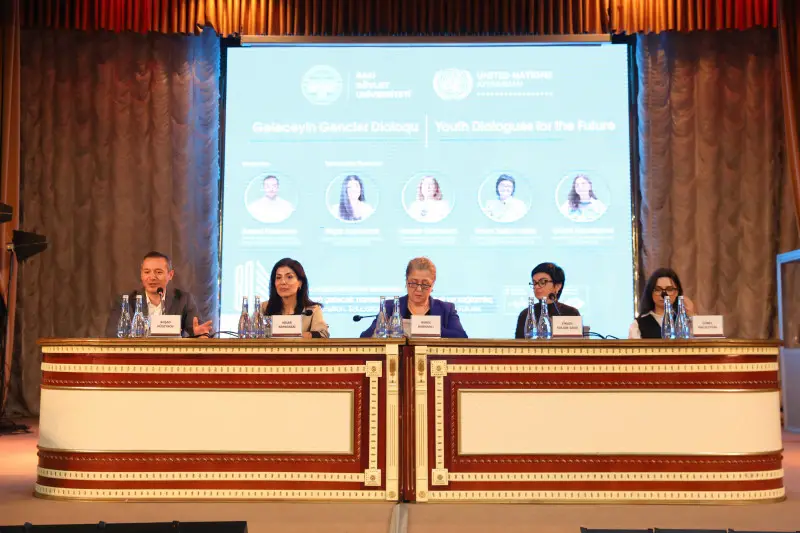
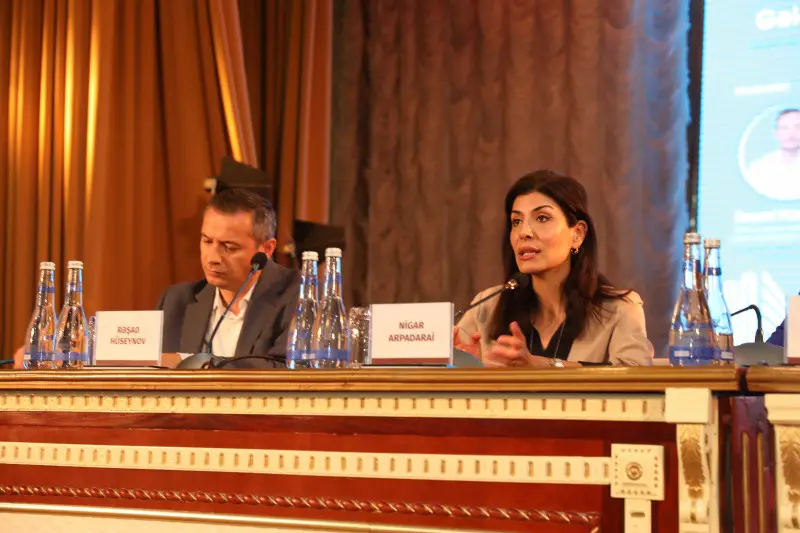
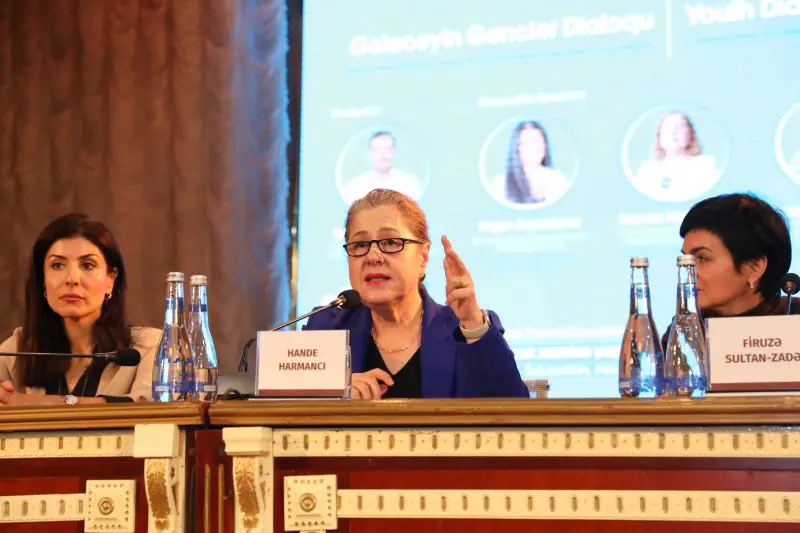
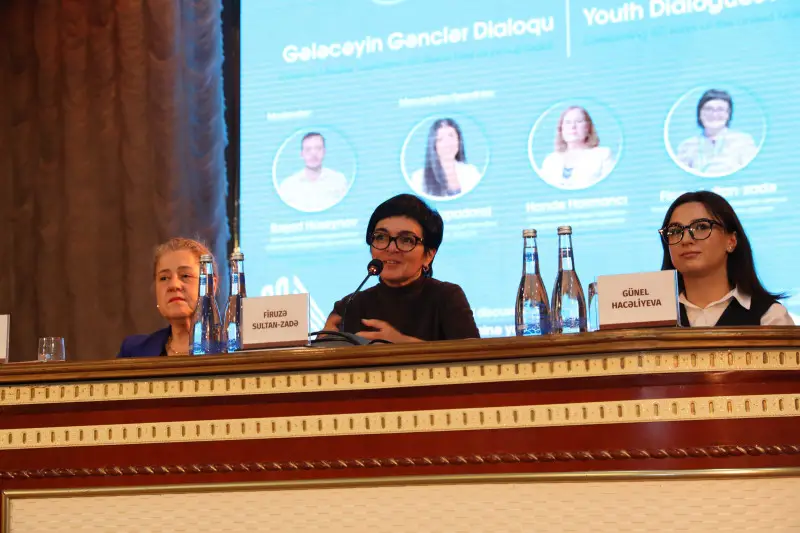
The event continued with a panel discussion titled “Green Transition, Education, and Health for a Sustainable Future.” Moderated by Rashad Huseynov, Partnership Specialist at the UN Resident Coordinator’s Office in Azerbaijan, the panel featured Nigar Arpadarai, High-Level Climate Champion and Member of Parliament; Hande Harmancı, WHO Representative in Azerbaijan; Firuza Sultan-zade, Head of the “Ecosphere” Social-Ecological Center and Associate Professor at BSU; and Gunel Hajaliyeva, BSU staff member and Youth Climate Envoy.
Speakers highlighted that climate change and its consequences affect all countries, including Azerbaijan. Combating climate change requires engagement from all segments of society, not only governments. Young people should act not merely as implementers but as authors of climate solutions. The panel emphasized the importance of the “One Health” concept, which integrates seven SDGs, and underscored the potential contributions of youth in advancing this approach.
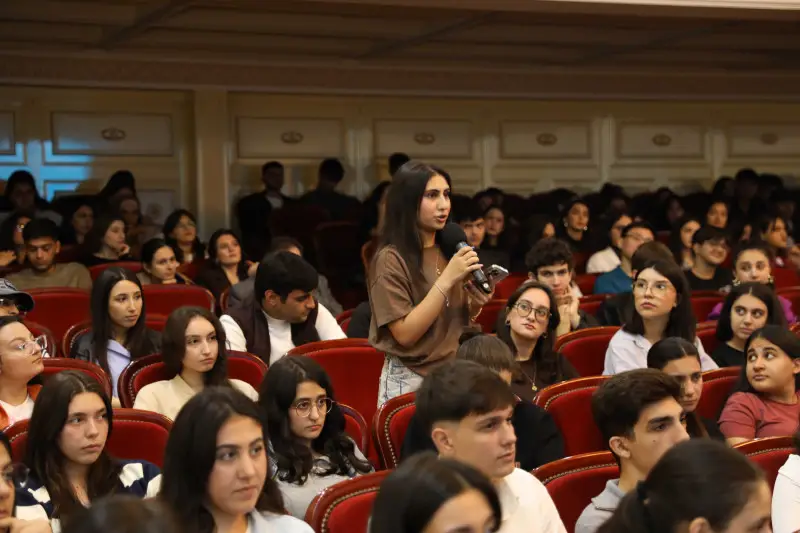
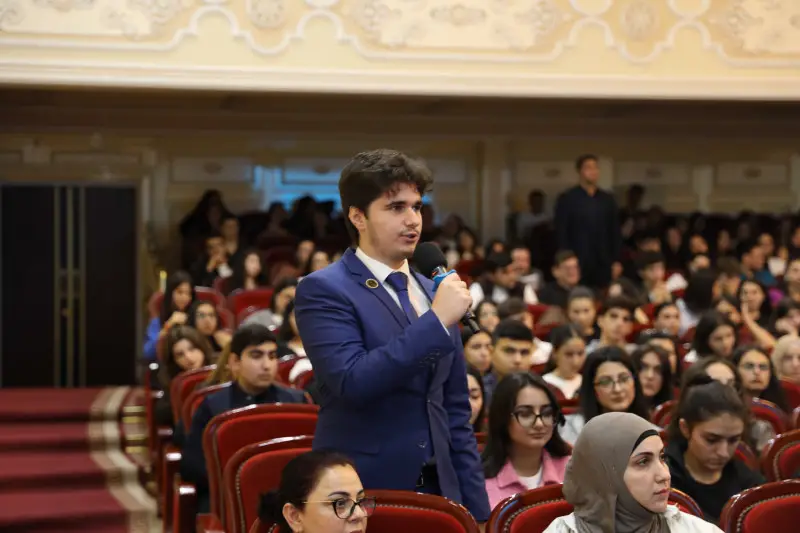
The event concluded with a Q&A session with students.
SDG 4: Quality Education, SDG 5: Gender Equality), SDG 10: Reduced Inequalities, SDG 13: Climate Action, SDG 16: Peace, Justice and Strong Institutions, SDG 17: Partnerships for the Goals