 als
alsMenu
News and Events
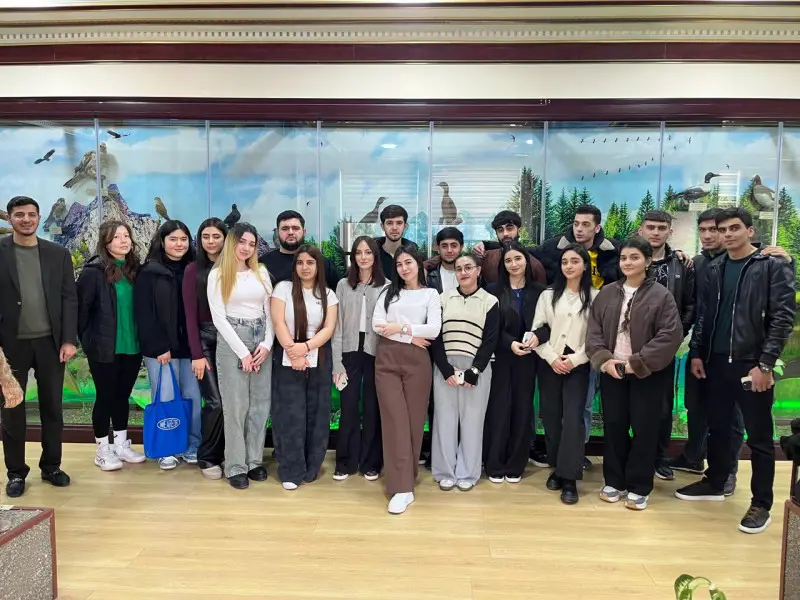
As part of a series of events dedicated to Science Day in the Republic of Azerbaijan (27 March), organized by the Student Scientific Society of the Faculty of Geography at Baku State University (BSU), students visited the Museum of Evolution.
During the excursion, participants explored the museum’s exhibits and gained detailed knowledge about fossil remains and rare skeletal specimens. Umudvar Malikov, a laboratory specialist at the museum, provided information on paleontological research methods and techniques used to determine the age of fossils. He explained, with concrete examples, how morphological changes in living organisms occur over time based on findings from different geological periods.
The session also covered the stages of preparing specimens, the technologies used for preserving skeletal and fossil remains, and the role of climate and geodynamic factors in the evolution of biodiversity.
It was emphasized that climate change—such as variations in temperature, precipitation, and ecological conditions—can lead to the extinction of some species while enabling others to adapt and evolve in new environments. This adaptive process gradually leads to fundamental changes in the structure and lifestyle of organisms. Evolution is closely linked to natural conditions, and major climatic shifts throughout Earth’s history have significantly influenced the development of the living world.
SDG 4 (Quality Education), SDG 13 (Climate Action), SDG 15 (Life on Land)