 als
alsMenu
News and Events
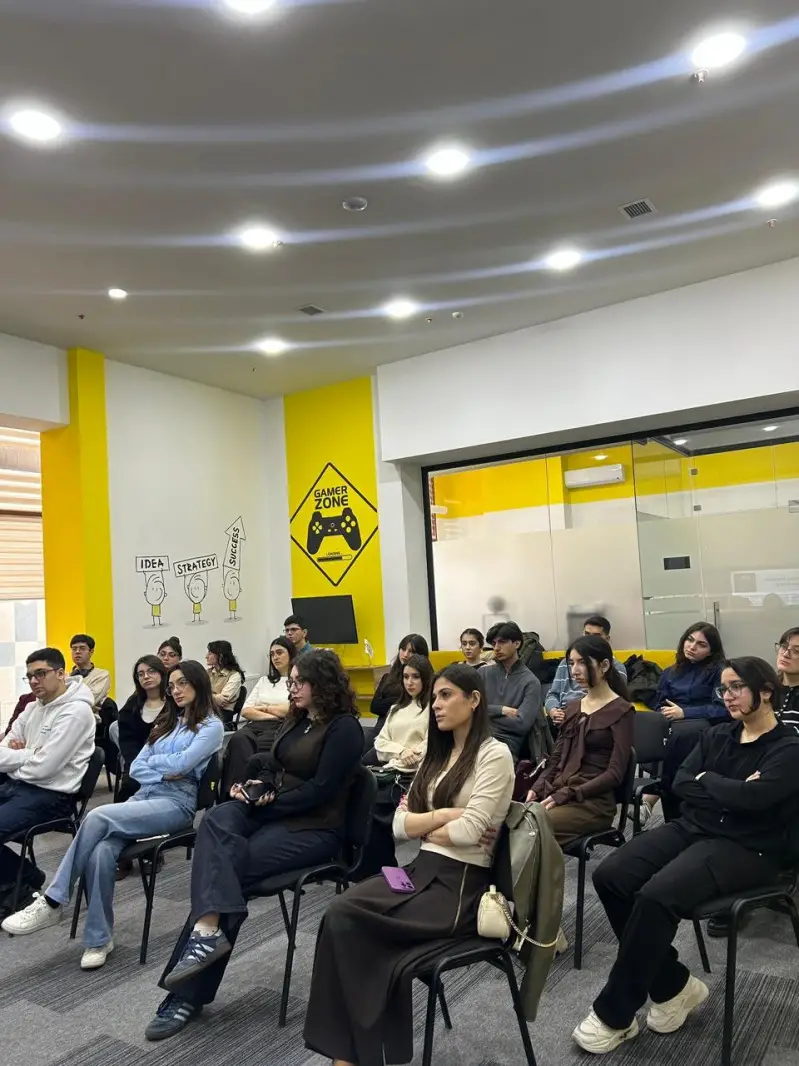
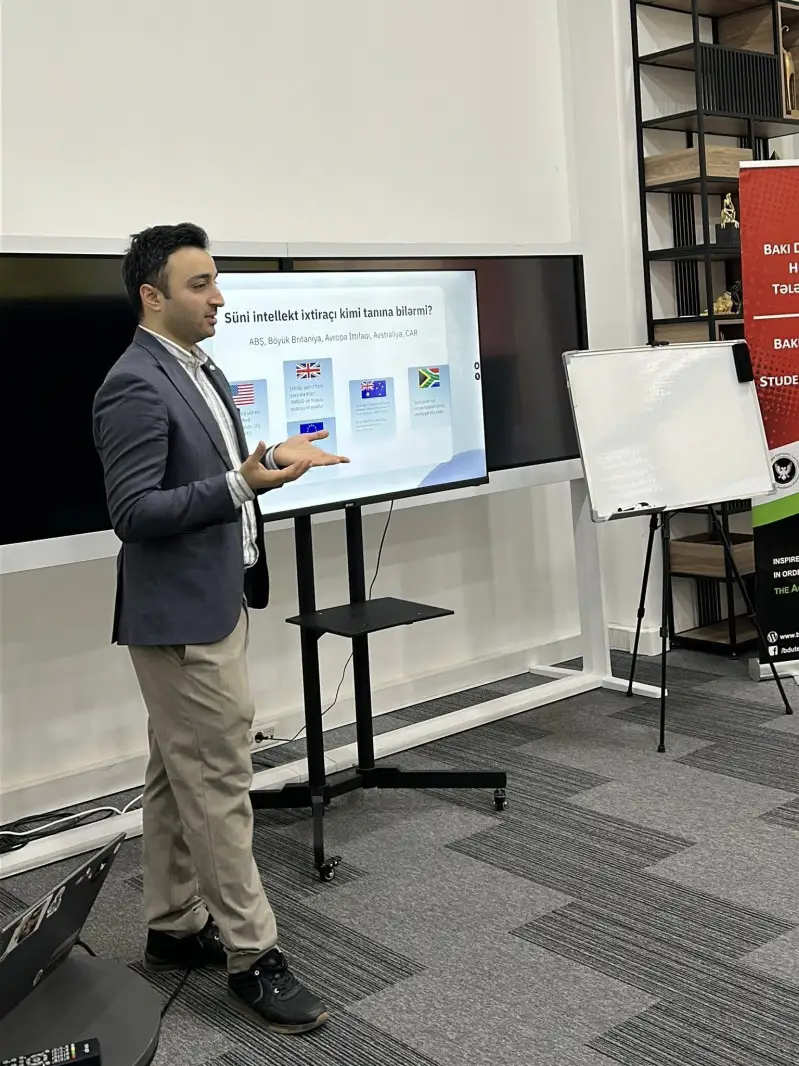
A meeting within the “Law Discussion Forum” project, organized by the Student Scientific Society of the Faculty of Law at Baku State University (BSU), was held as part of events dedicated to Science Day in the Republic of Azerbaijan (27 March).
During the session, Elnur Karimov, Senior Lecturer at ADA University and PhD in Law, led discussions on “Recognition of Artificial Intelligence as an Inventor in Patent Law.” The topic was examined from both theoretical and practical legal perspectives.
In the theoretical part, the issue of whether artificial intelligence can possess independent inventive capacity was analyzed within the framework of fundamental principles of intellectual property law, particularly the connection between inventorship and human creativity, as well as the concepts of legal personality and legal capacity. It was noted that, under the relevant provisions of the Law of the Republic of Azerbaijan “On Patents,” an inventor is defined as a natural person who creates the invention, and initial patent rights belong to that individual. Accordingly, it was emphasized that, under the current legal framework, artificial intelligence systems cannot be recognized as inventors as they lack legal subjectivity.
In the practical segment, the legal status of AI-generated inventions was examined through judicial precedents, with particular reference to the Thaler v. Vidal decision of the United States Court of Appeals for the Federal Circuit. The ruling affirmed that listing an artificial intelligence system as an inventor is inconsistent with existing legislation and confirmed that the concept of inventorship applies exclusively to humans. Comparative legal analysis further demonstrated that similar positions are upheld in the United Kingdom and by the European Patent Office, indicating that AI is not currently recognized as an independent inventor in international practice.
It was concluded that the recognition of artificial intelligence as an inventor constitutes a complex legal issue requiring a reconsideration of legal personality, responsibility, and the framework of intellectual property rights.
The meeting continued with active discussions and responses to participants’ questions.
SDG 4 (Quality Education), SDG 9 (Industry, Innovation and Infrastructure), SDG 16 (Peace, Justice and Strong Institutions)