 als
alsMenu
News and Events
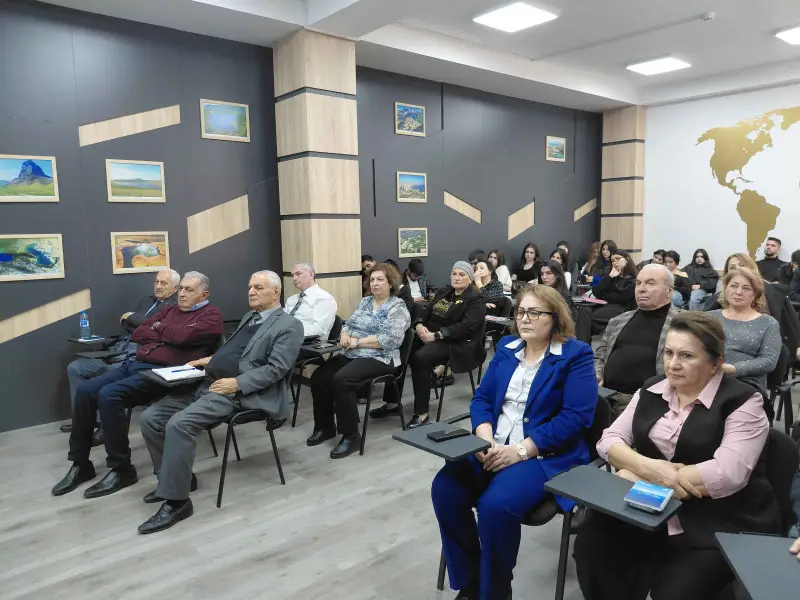
At the Faculty of Geography of Baku State University (BSU), a scientific seminar was held focusing on the transformation of Caspian coastal landscapes.
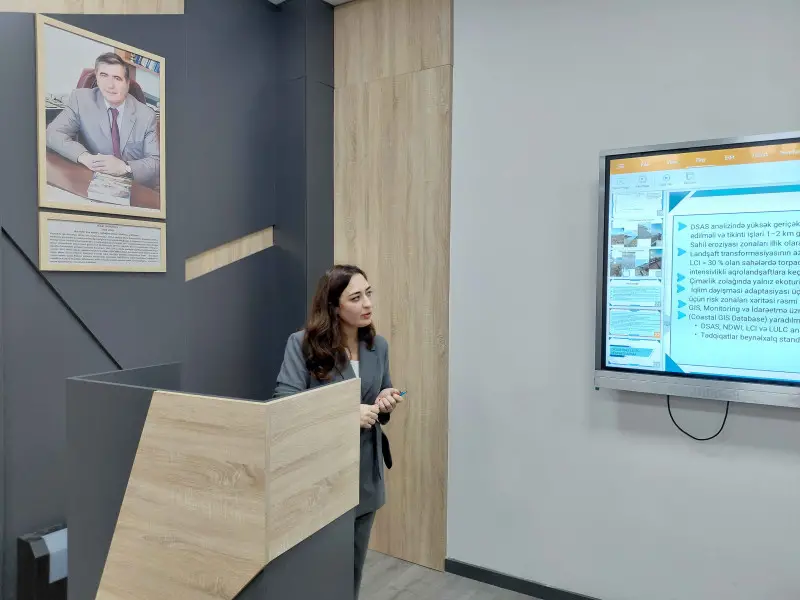
During the seminar, Gunay Abbasova, a doctoral candidate at the Department of Physical Geography, presented her research titled: “Investigation of the Impact of Anthropogenic Factors on Landscape Transformation in Caspian Coastal Areas: The Case of the Lankaran Physical-Geographical Region.”
Opening the seminar, Associate Professor İrada Aliyeva, Head of the Department of Hydrometeorology, emphasized that coastal landscapes in the modern era are rapidly changing due to anthropogenic impacts. She noted that studying these changes is crucial for ecological safety, sustainable development, and planning of coastal economic activities. She also highlighted that Gunay Abbasova’s research investigates the classification of Caspian coastal landscapes, their stages of transformation, the main anthropogenic factors affecting them, and conducts scientific studies on these processes.
Presenter Gunay Abbasova characterized the natural conditions of the Lankaran physical-geographical region, including its climate features, relief and hypsometric structure, hydrographic network, soil-vegetation cover, and landscape diversity. The study identified subtropical conditions in the coastal zone, dense population, and intensive economic activity as the primary factors accelerating landscape transformation. Based on the research, a zoning map was created showing areas subjected to high, medium, and relatively low transformation levels, along with preliminary assessments of ecological risk, coastal ecosystem resilience, and recreational capacity.
During the seminar, professors Chingiz Ismayilov and Yaqub Garibov, Doctor of Geography Shakar Mammedova, Associate Professor Ramiz Ahlimanov, PhD in Geography Laman Hasanaliyeva, Senior Lecturer Mubariz Orujov, and others engaged in discussions, highlighted the relevance of the research topic, praised the innovative methodological approach, and recommended the continuation of scientific investigations in this field.
SDG 4 (Quality Education), SDG 13 (Climate Action), SDG 14 (Life Below Water), SDG 15 (Life on Land)