
 als
alsMenu
News and Events
The Student Canteen at Baku State University (BSU) is designed to provide affordable, nutritious, and high-quality meals for students, faculty, and staff. The canteen includes a large dining hall accommodating up to 500 students, a smaller hall for 80 faculty and staff members, and a seasonal outdoor canteen that can serve 200 additional diners during warmer months.
Professional Culinary Services
To ensure an excellent dining experience, BSU partners with experienced food service providers and employs skilled chefs and kitchen staff who are specially trained to prepare meals meeting the highest standards of quality, hygiene, and nutrition.
Quality Control and Hygiene
In compliance with Azerbaijani food safety and hygiene regulations, the university maintains strict standards for food storage, preparation, and service. A dedicated Food Quality Commission, consisting of BSU staff and overseen by the university’s Labor Union, regularly inspects the canteen to ensure safety and quality.
Subsidized Meals and Support for Vulnerable Students
BSU is committed to supporting students in need. The university provides subsidized meal vouchers, covering 30–50% of the meal cost, to students from low-income households. Additionally, free meals are available to socially vulnerable students, particularly those residing in university dormitories or identified through BSU’s social support programs.
Catering for Conferences and Events
The BSU Student Canteen also hosts local and international delegates during conferences and university events. The team prepares a variety of national Azerbaijani dishes alongside international options for lunches, coffee breaks, and banquets, ensuring high-quality service for all visitors.
Affordable Food Options
BSU offers affordable meals to make campus dining accessible for all students. Popular dishes such as plov, kebabs, and soups are priced competitively, with special discounts for students benefiting from social programs.
Sample Student Canteen Menu
-
Plov with meat or vegetables
-
Grilled chicken or fish
-
Seasonal soups and salads
-
Fresh bread and traditional Azerbaijani pastries
-
Hot and cold beverages
-
Daily vegetarian and vegan options
By providing affordable, nutritious meals and targeted support for students in need, BSU ensures that all members of the university community have access to a balanced diet, supporting both academic success and overall wellbeing.
5. Key Measures and Initiatives
5.1 Student Food Support Programme
BSU has launched the Student Food Support Programme aimed at reducing food insecurity and promoting healthy nutrition among students:
-
BSU Food Pantry: Provides essential food and hygiene products to students facing temporary or chronic food shortages.
-
Meal Voucher Scheme: Enables financially vulnerable students to receive free or discounted meals at BSU canteens and partner cafes.
-
Subsidized Dining Options: Campus dining halls offer affordable meal packages prepared with nutritional balance in mind.
-
Emergency Meal Assistance: In urgent cases, students may receive immediate meal support coordinated by the Dean’s Office and Student Affairs Unit.
5.2 Financial and Social Support
-
Emergency Financial Assistance Fund: Provides one-time grants or temporary stipends to students in financial distress.
-
Housing and Transport Subsidies: Ensures that low-income students have access to safe housing and affordable transport.
-
Health and Well-being Services: Offers psychological counselling and legal advice for students under economic pressure.
5.3 Community and Partnership Engagement
-
BSU collaborates with local NGOs, supermarkets, and charities to source food donations and sponsorships for hunger-relief initiatives.
-
The Student Volunteer Club supports awareness campaigns on food waste reduction, responsible consumption, and peer-to-peer support.
6. Monitoring and Evaluation
-
The Student Affairs Department maintains records of all students benefiting from hunger and poverty alleviation programs.
-
Regular needs assessments and surveys are conducted to evaluate the extent of food insecurity and the effectiveness of interventions.
-
An annual report is prepared for the Rector’s Office summarizing outcomes and identifying areas for improvement.
7. Confidentiality and Non-Discrimination
All applications for support are handled confidentially. No student shall face stigma or discrimination for participating in any hunger or poverty alleviation program. Support is provided strictly based on demonstrated need and student well-being.
8. Review and Continuous Improvement
This policy is reviewed biennially by the Student Affairs Department in consultation with the Rector’s Office and relevant administrative units. Revisions will align with BSU’s strategic priorities, national social protection frameworks, and global best practices.
BSU actively promotes sustainable and inclusive food choices for all members of its campus community. The university recognizes that dietary diversity, health, and sustainability are key components of student and staff well-being, as well as institutional responsibility under the UN Sustainable Development Goals (SDG 2 – Zero Hunger and SDG 12 – Responsible Consumption and Production).
To ensure accessibility and sustainability in campus dining, BSU has introduced the following initiatives:
-
Variety of Meal Options: All university canteens and dining facilities provide a range of balanced and affordable meals, including vegetarian and vegan options, ensuring that students with different dietary preferences and ethical choices are accommodated.
-
Sustainable Sourcing: BSU’s food service providers prioritize locally sourced, seasonal ingredients to minimize the environmental impact of food transportation and to support local farmers and producers.
-
Healthy Nutrition Standards: Menus are designed to align with health and nutrition guidelines, focusing on reduced use of processed foods, minimal food waste, and responsible portion sizes.
-
Awareness and Education: Through its Health Support Service and Sustainability Office, BSU organizes awareness campaigns on healthy eating habits, the importance of plant-based diets, and the role of sustainable consumption in combating climate change.
-
Food Waste Reduction: BSU conducts regular monitoring and audits of food waste in campus canteens and implements waste segregation practices to promote recycling and composting.
These efforts reflect BSU’s ongoing commitment to fostering a healthy, inclusive, and environmentally responsible food culture on campus. The university continues to collaborate with catering partners, student associations, and local sustainability organizations to further expand its range of plant-based and eco-friendly food offerings.
BSU ensures that all students, staff, and visitors have access to healthy, affordable, and diverse food options across its main campus. The university’s dining services are managed in collaboration with certified local food providers who follow nutritional and hygiene standards established by the Ministry of Health and the Ministry of Education of Azerbaijan.
-
BSU operates three student canteens and several smaller cafeterias across different faculties, offering low-cost, balanced meals to ensure food accessibility for all income levels.
-
Prices are regulated to remain below city market averages, ensuring affordability for low-income students.
-
-
Healthy Meal Standards
All menus are designed to promote nutrition and balance, including daily servings of vegetables, grains, and protein-rich foods. Fried and high-fat options are limited, and freshly prepared meals are prioritized over processed foods. -
Introduction of Vegan and Vegetarian Options (2024)
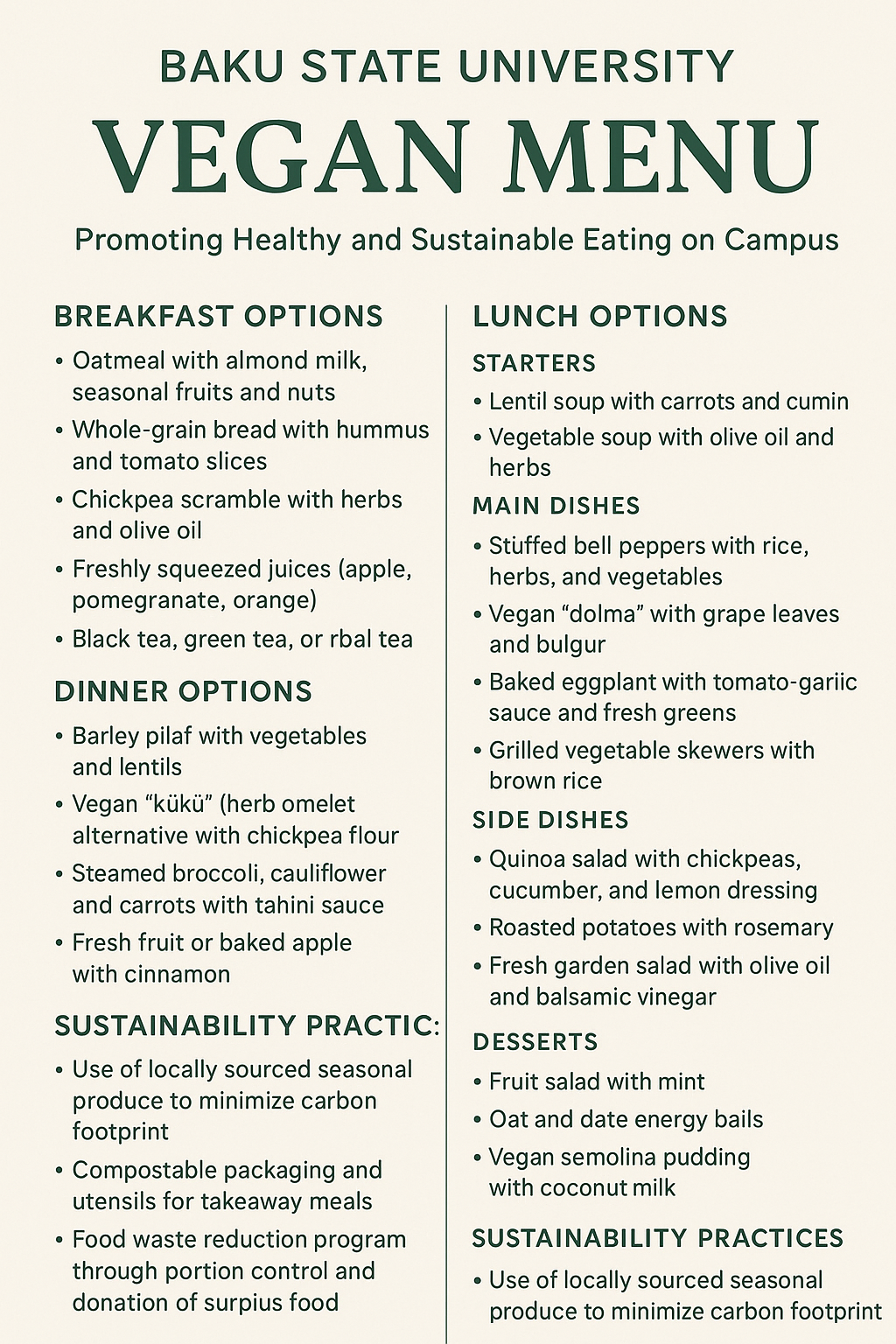
In 2024, BSU introduced a Vegan Menu Initiative as part of its commitment to sustainability and student well-being. The sample weekly menu includes -
Locally Sourced Ingredients
BSU’s catering partners prioritize locally produced fruits, vegetables, and grains, reducing environmental impact and supporting local farmers. -
Filtered Water and Waste Reduction
The university has installed filtered water stations around the campus to encourage reusable bottles and reduce plastic waste. Cafeterias have implemented food waste monitoring and recycling bins as part of the “Green BSU Initiative.” -
Feedback and Student Involvement
The Student Affairs Department regularly collects feedback on food quality and variety through online surveys and suggestion boxes. Recent surveys in 2024 indicated over 80% satisfaction with affordability and 72% satisfaction with healthy food availability.
Baku State University – Vegan Menu (Sample Week)
Breakfast Options
-
Oatmeal with almond milk, seasonal fruits, and nuts
-
Whole-grain bread with hummus and tomato slices
-
Chickpea scramble with herbs and olive oil
-
Freshly squeezed juices (apple, pomegranate, orange)
-
Black tea, green tea, or herbal tea
Lunch Options
Starters:
-
Lentil soup with carrots and cumin
-
Vegetable soup with olive oil and herbs
Main Dishes:
-
Stuffed bell peppers with rice, herbs, and vegetables
-
Vegan “dolma” with grape leaves and bulgur
-
Baked eggplant with tomato-garlic sauce and fresh greens
-
Grilled vegetable skewers with brown rice
Side Dishes:
-
Quinoa salad with chickpeas, cucumber, and lemon dressing
-
Roasted potatoes with rosemary
-
Fresh garden salad with olive oil and balsamic vinegar
Desserts:
-
Fruit salad with mint
-
Oat and date energy balls
-
Vegan semolina pudding with coconut milk
Dinner Options
-
Barley pilaf with vegetables and lentils
-
Vegan “kükü” (herb omelet alternative with chickpea flour)
-
Steamed broccoli, cauliflower, and carrots with tahini sauce
-
Fresh fruit or baked apple with cinnamon
Drinks and Extras
-
Plant-based milks (soy, oat, or almond) available for coffee and tea
-
Filtered water stations to reduce bottled water use
-
Locally sourced herbal infusions


.jpg)