 als
alsMenu
News and Events
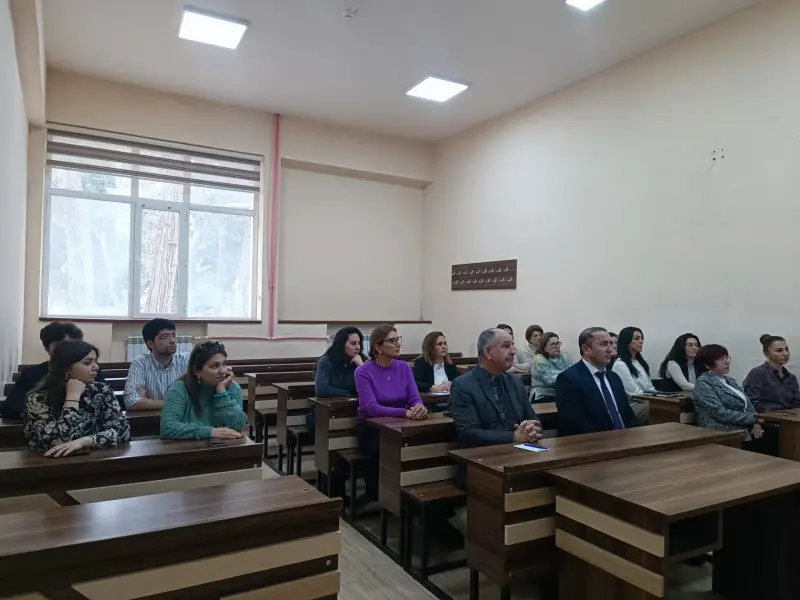
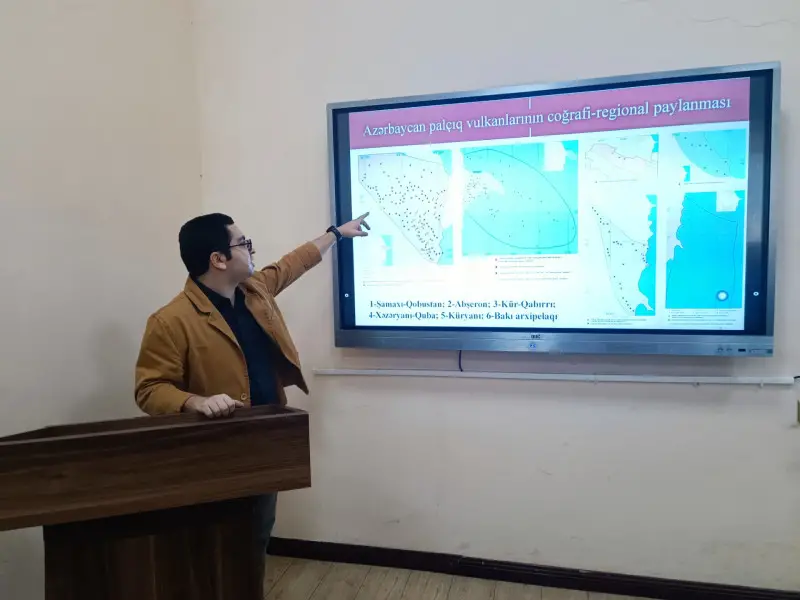
A scientific seminar titled “The geoecological potential of Azerbaijan’s mud volcanoes and prospects for integration into the UNESCO Global Geopark model” was held at Baku State University (BSU) within the framework of events dedicated to Science Day in Azerbaijan.
The presenter, doctoral student Tahir Yunuslu from the Department of Geographical Ecology, delivered a study on the role of Azerbaijan’s mud volcanoes in natural landscape systems, their geoecological characteristics, and their evaluation within the geopark model. The research analyzed 16 mud volcanoes located on the Absheron Peninsula using modern geographic information systems and remote sensing data. Spatial analyses identified their role in landscape formation, participation in geochemical processes, and their contribution to creating unique ecological conditions for biodiversity.
Based on the findings, an eco-geographical approach was applied to assess mud volcanoes within the geopark model. Several sites were identified as having significant scientific, ecological, and tourism potential. The study emphasized that preserving these formations as geological heritage sites and utilizing them for geotourism could contribute to regional socio-economic development.
The seminar concluded with the presentation of key findings and future research directions, highlighting that evaluating mud volcanoes within the geopark concept is essential for preserving Azerbaijan’s natural heritage and promoting it at the international level, particularly within the framework of UNESCO Global Geoparks.
SDG 4 (Quality Education), SDG 11 (Sustainable Cities and Communities), SDG 13 (Climate Action), SDG 15 (Life on Land)