 als
alsMenu
News and Events
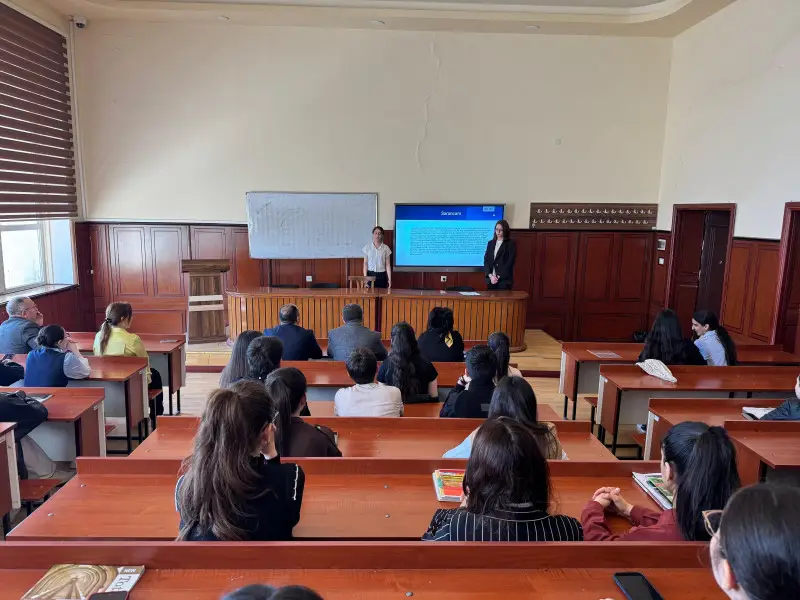
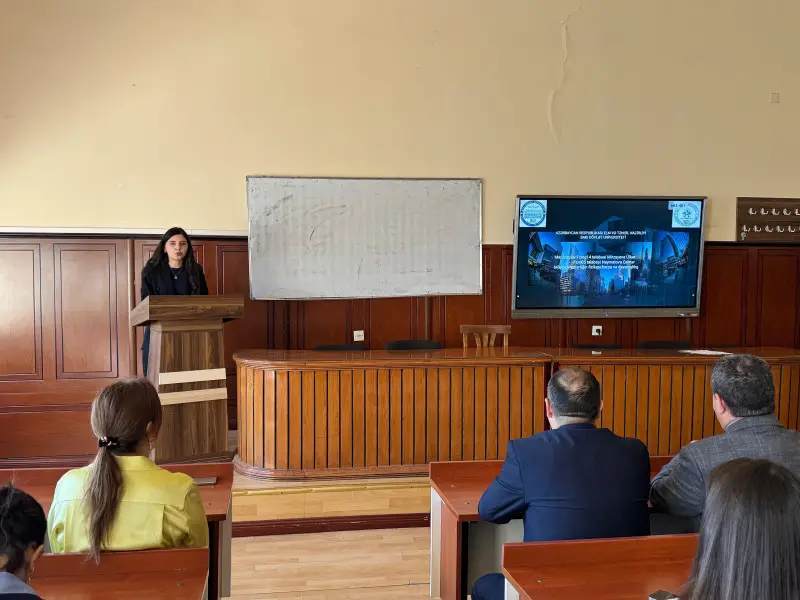
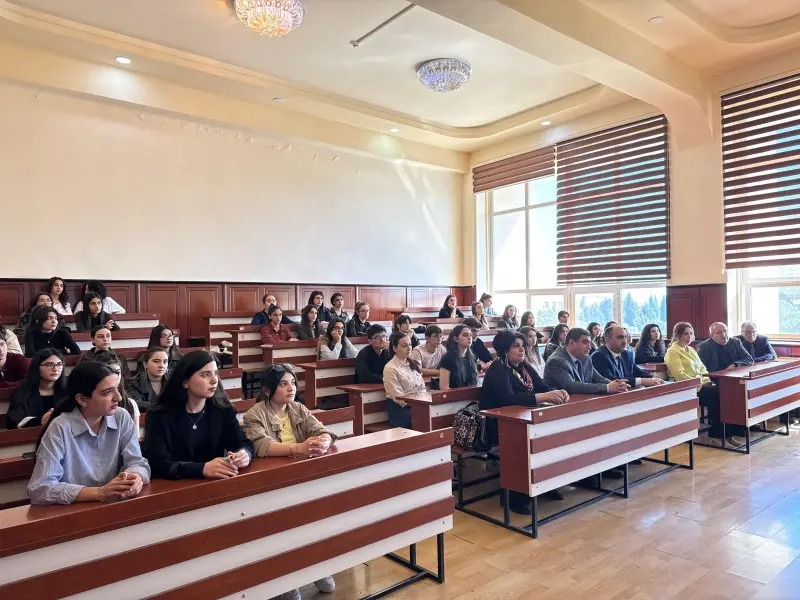
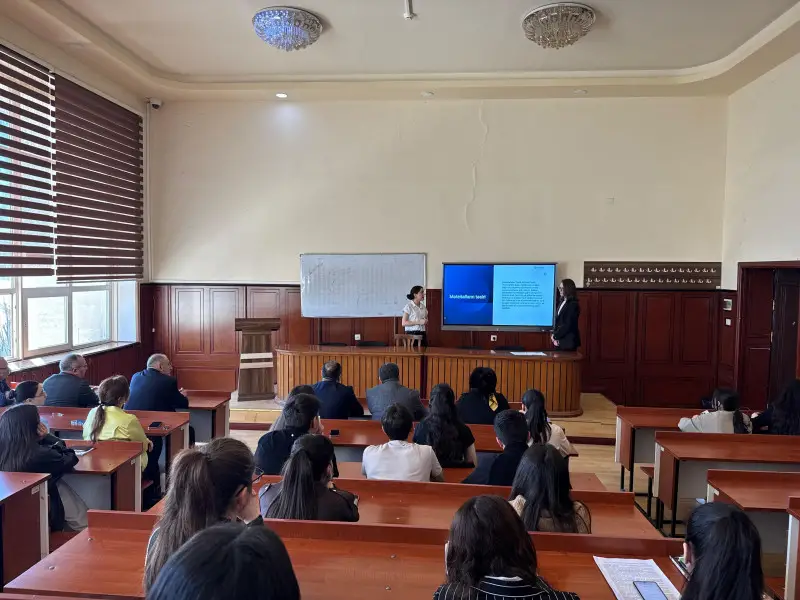
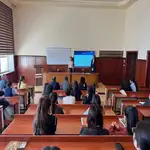
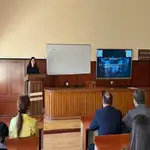
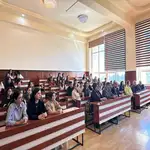
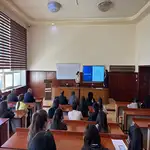
An academic seminar titled “Physics Today” was held at Baku State University (BSU) within the framework of events dedicated to the “Year of Urban Planning and Architecture,” organized by the Student Scientific Society of the Faculty of Physics. During the seminar, second-year students Ulker Mirzayeva and Gamar Neymatova delivered a presentation on “Physics of Architecture: Restoration and Sustainability.”
The presenters reviewed the historical development stages of Azerbaijani architecture, highlighting the significant role of Heydar Aliyev in shaping urban planning and architectural policy. It was noted that many important architectural projects in the capital, Baku, were implemented during his leadership, and that this strategic direction is currently being continued systematically under the leadership of Ilham Aliyev, particularly in the liberated territories.
The presentations provided a comprehensive analysis of the fundamental importance of applying physical laws in architecture and urban planning. It was emphasized that the laws of mechanics ensure the structural stability of buildings and their resistance to external forces, while thermodynamic principles play a key role in improving energy efficiency and minimizing heat loss. Aerodynamics contributes to optimizing airflow in urban environments, and acoustics enables effective noise management. Electromagnetism and motion dynamics are essential for efficient energy distribution and transportation systems. Additionally, the laws of optics, particularly the inverse square law, are crucial for rational lighting design, while the physical properties of surfaces directly influence light distribution and the formation of the visual environment.
The seminar also highlighted the applications of nanotechnology in modern urban planning. It was noted that self-healing materials extend the lifespan of buildings, while photocatalytic coatings help break down pollutants under sunlight, maintaining surface cleanliness and improving environmental conditions. Overall, the integration of physics and nanotechnology was emphasized as a key factor in ensuring the functional and environmental sustainability of urban development.
At the end of the presentation, practical approaches were demonstrated using modern architectural examples such as the International Mugham Center and the Heydar Aliyev Center.
SDG 4 (Quality Education), SDG 9 (Industry, Innovation and Infrastructure), SDG 11 (Sustainable Cities and Communities)