 als
alsMenu
News and Events
Beginning with the 2026/2027 academic year, the Faculty of Mechanics and Mathematics at Baku State University (BSU) will offer two new master's specializations—“Composite Materials” and “Mechatronic Modules”—aimed at preparing highly qualified specialists.
Developed in line with the latest trends in science and technology, the new programs are designed to educate skilled engineers and researchers capable of addressing contemporary technological challenges.
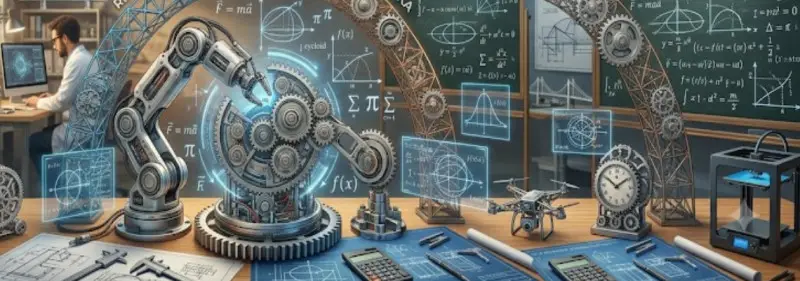
The “Composite Materials” specialization lies at the intersection of mechanics and materials science, focusing on the theoretical and experimental study of the mechanical behavior, strength, and durability of advanced materials. The curriculum includes courses in composite materials mechanics, elasticity and plasticity theories, the finite element method, computational mechanics, and computer modeling. Students will gain opportunities to investigate the properties of composite materials used in the aerospace, energy, transportation, construction, and high-tech industries, while conducting research on the development of new material systems.
The “Mechatronic Modules” specialization integrates mechanics, electronics, automation, information technologies, and control systems. The program provides students with both fundamental and applied knowledge in mechatronic system design, sensor and actuator technologies, microprocessor systems, industrial automation, robotics, and digital control systems. Throughout their studies, students will complete engineering projects using modern software and technological platforms to solve real-world engineering problems.
Both specializations emphasize active involvement in scientific research, enabling students to participate in innovative projects using advanced laboratory equipment and specialized software. The educational process is designed to strengthen both theoretical knowledge and practical skills.
The primary objective of these new specializations is to prepare professionals capable of solving complex engineering problems, developing innovative technologies, and conducting advanced scientific research in modern engineering and high-tech fields.
Graduates will be well qualified for careers in research institutes, higher education institutions, industrial and engineering enterprises, automation and robotics companies, design and engineering organizations, as well as the high-technology sector.
SDG 4 (Quality Education), SDG 8 (Decent Work and Economic Growth), SDG 9 (Industry, Innovation and Infrastructure)