 als
alsMenu
News and Events
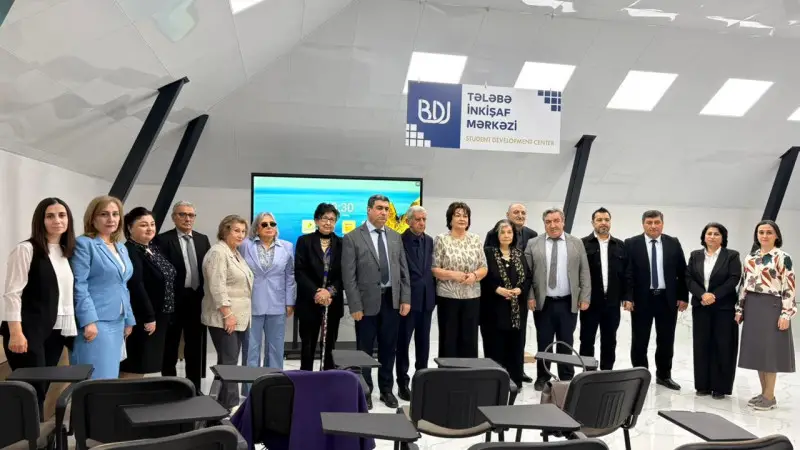
An academic event titled “The Development of Gender Legislation in Azerbaijan” was held at Baku State University, jointly organized by the Faculty of Social Sciences and Psychology and the Faculty of Physics.
During the opening session, deans Rovshan Cavadov and Bahtiyar Pashayev emphasized that gender issues have always received special attention in Azerbaijan. They noted that a comprehensive legal and institutional framework has been developed to ensure women’s equal participation in society. In recent years, socio-economic reforms, increased employment opportunities, and the development of entrepreneurship have contributed to expanding women’s economic participation and reducing unemployment among women.
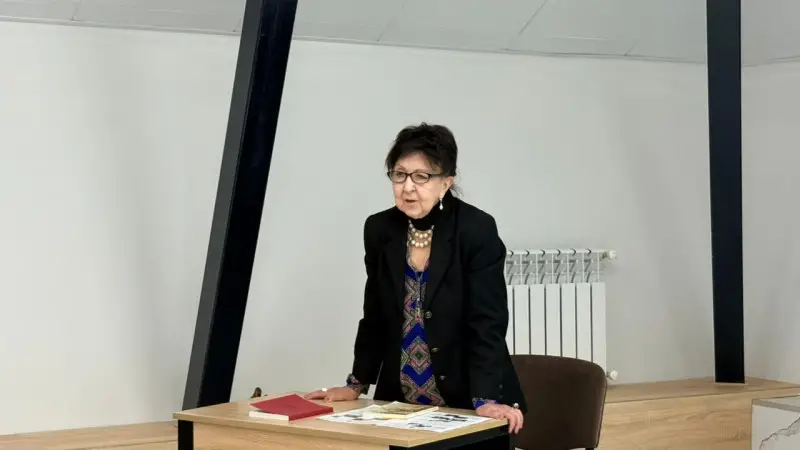
Professors also delivered detailed presentations on the evolution of gender legislation in the country. Adile Abasova and Rena Ibrahimkhalilova highlighted that Azerbaijan’s gender policy framework began forming under the initiative of National Leader Heydar Aliyev. They stressed the importance of key legislative acts, including the 2006 Law on “Ensuring Gender Equality” and the 2010 Law on “Prevention of Domestic Violence,” which established a legal basis for equality, non-discrimination, and social protection mechanisms for victims of domestic violence.
Speakers at the event, including Rabiyat Aslanova, corresponding member of ANAS Selima Mehdiyeva, professors Ziba Agayeva, Rena Mirzazade, Zemfira Hajiyeva, Lala Mammadova, and vice-dean for social affairs and student work of the Faculty of Physics Mammad Mammadov, underlined that legal reforms must be accompanied by changes in public mindset. They emphasized the importance of educational and awareness-raising activities in promoting gender equality and eliminating discrimination in society.
The event concluded with a shared view that strengthening gender equality requires both strong legislation and continuous public education efforts.
SDG 4 (Quality Education), SDG 5 (Gender Equality), SDG 10 (Reduced Inequalities), SDG 16 (Peace, Justice and Strong Institutions)