 als
alsMenu
News and Events
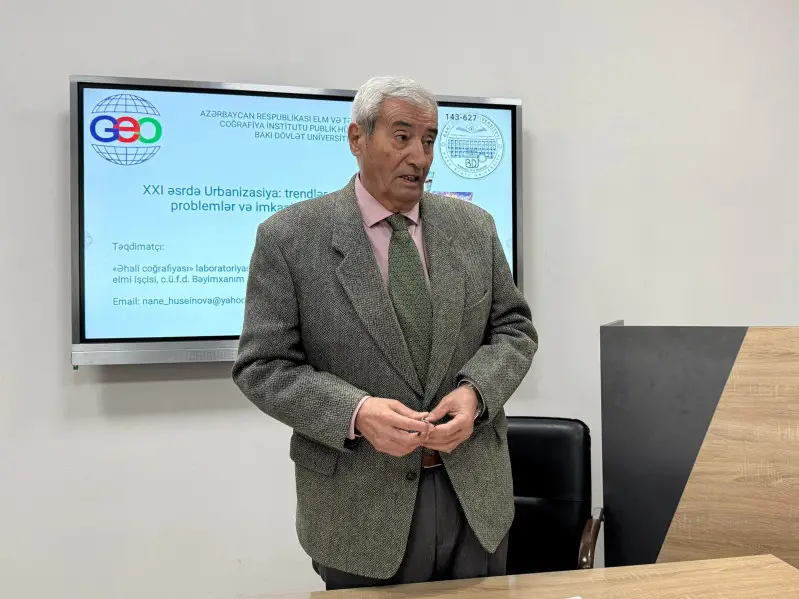
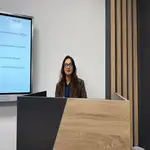
A scientific seminar on the topic “Urbanization in the 21st century: Trends, challenges, and opportunities” was held at the Faculty of Geography of Baku State University (BSU) within the framework of the “Year of urban planning and architecture.”
The seminar was delivered by Beyimkhanim Huseynova, a research fellow at the population geography laboratory of the Institute of Geography under the Ministry of Science and Education, and a PhD in geography.
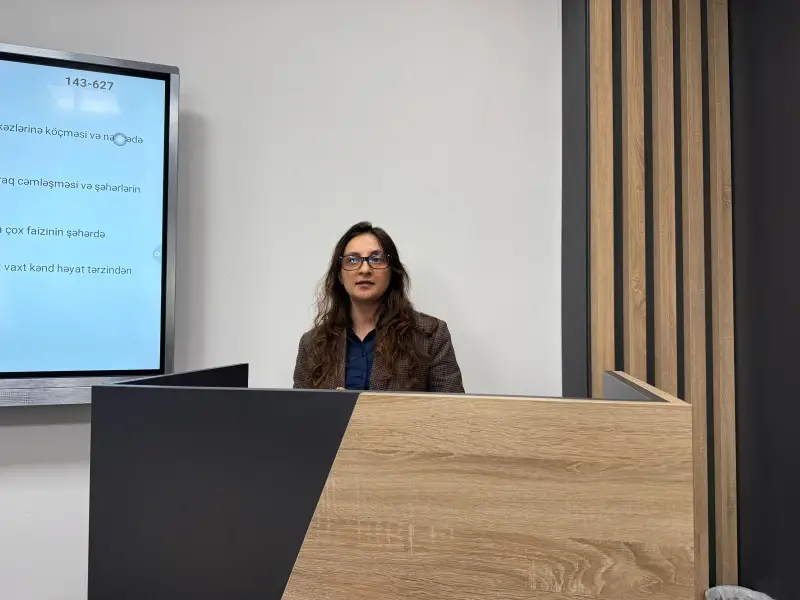
Head of the Department of Azerbaijan Geography and Geography Teaching Methods at BSU, Associate Professor Saleh Nagiyev, emphasized the multidimensional development of urbanization processes in the 21st century, noting that research in this field represents an important scientific priority both nationally and globally.
In her presentation, Beyimkhanim Huseynova highlighted the key characteristics of urbanization processes observed in different regions of the world. She provided detailed information on the formation of cities, stages of their development, and principles of spatial organization. It was noted that rapid urbanization expanded significantly on a global scale in the previous century, particularly in developing countries, leading to the formation of large urban agglomerations—a trend that continues today. The proper classification of urban systems based on scale and functional features plays a crucial role in addressing socio-economic challenges faced by large cities.
The speaker also discussed opportunities for developing sustainable and livable urban environments under conditions of rapid urban growth, offering a comparative analysis of urbanization processes across various regions.
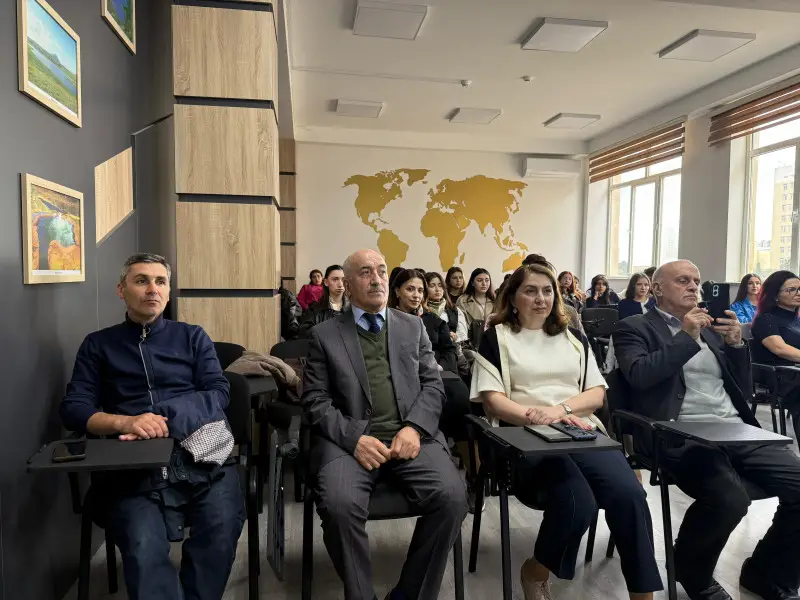
The seminar concluded with discussions between students and faculty members, during which participants’ questions were addressed.
SDG 4 (Quality Education), SDG 11 (Sustainable Cities and Communities), SDG 9 (Industry, Innovation and Infrastructure)