 als
alsMenu
News and Events
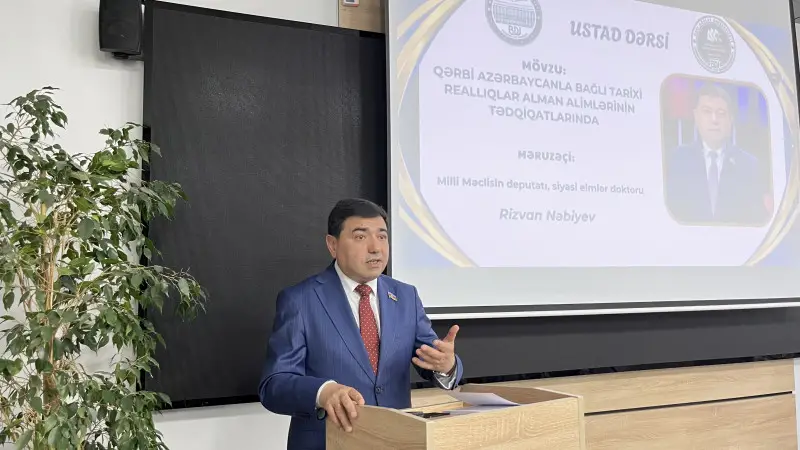
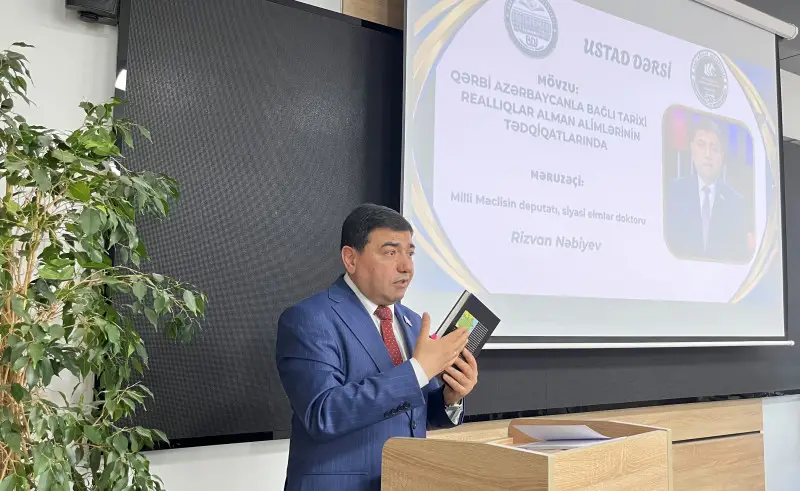
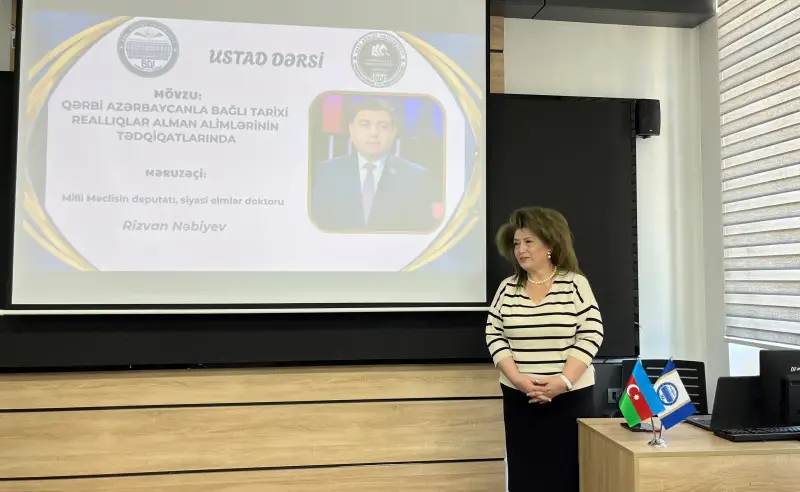
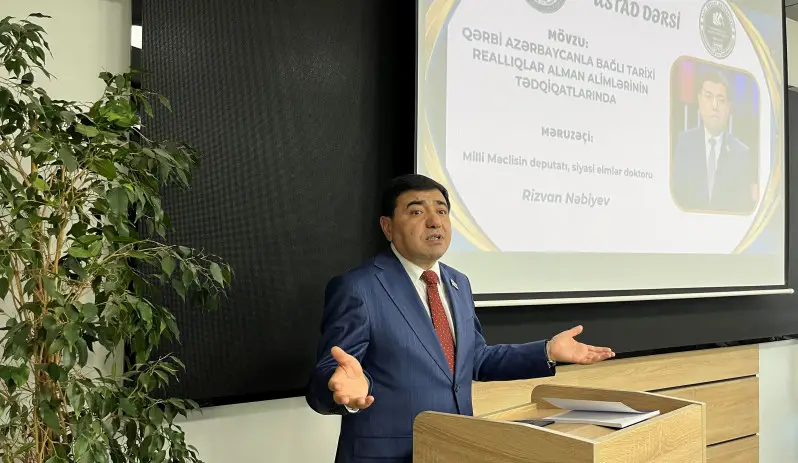
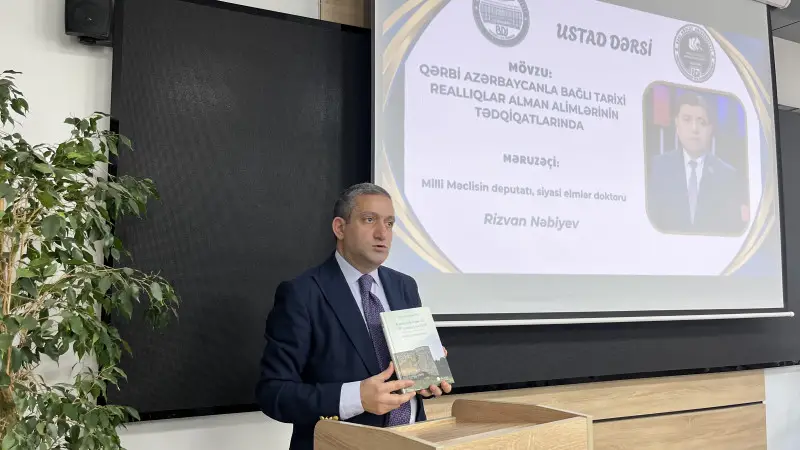
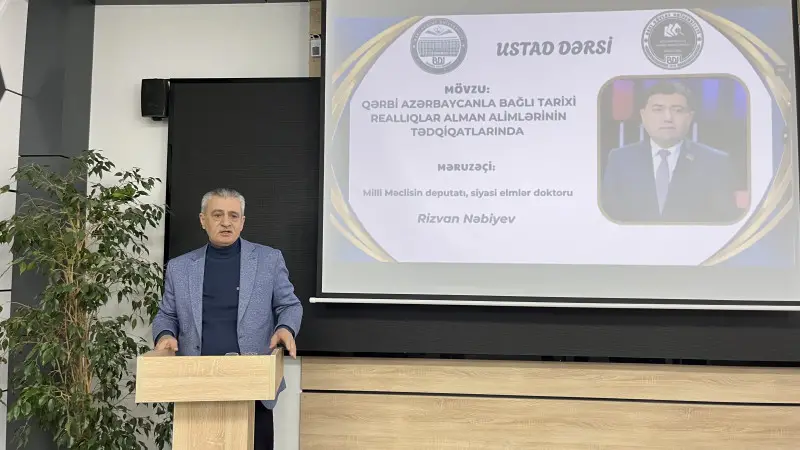
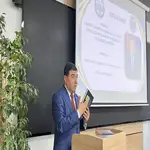
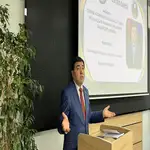
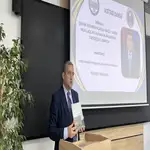
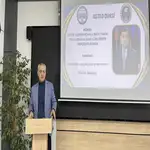
A master class titled “Historical Realities of Western Azerbaijan in the Research of German Scholars” was held at the Faculty of Information and Document Management of Baku State University (BSU) with the participation of faculty members and students. The session was delivered by Rizvan Nabiyev, Member of the National Assembly of Azerbaijan and Doctor of Political Sciences.
In his presentation, Rizvan Nabiyev stated that the historic victory achieved under the leadership of President of the Republic of Azerbaijan and Commander-in-Chief Ilham Aliyev in the 44-day Patriotic War paved the way not only for the Great Return to Karabakh and Eastern Zangezur but also for discussions concerning Western Azerbaijan. He emphasized the importance of conducting research in this area and bringing historical realities to light.
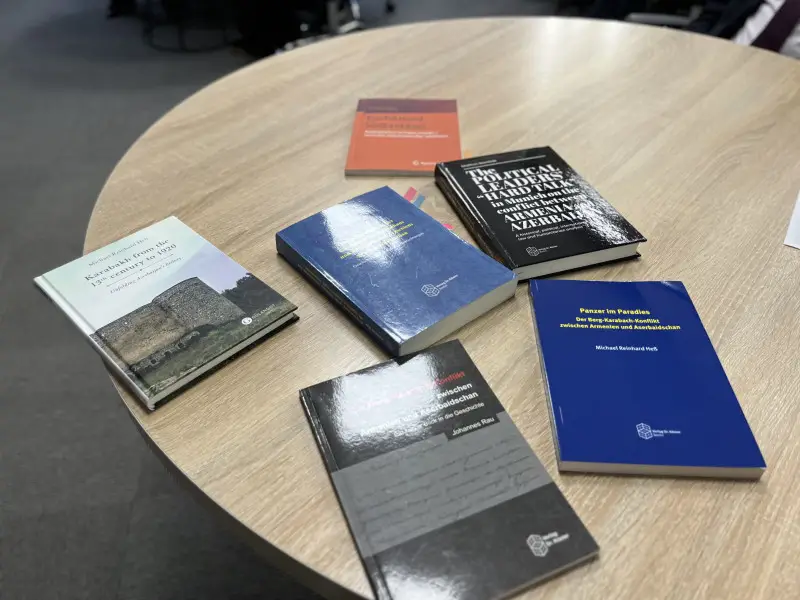
Drawing on the works of German scholars, including Professor Rüdiger Kipke, Professor Johannes Rau, Michael Reinhard Hess, Matthias Dornfeldt, and Professor Hans-Joachim Heintze, published between 2007 and 2023, the presentation examined the mass resettlement of Armenians to historical Azerbaijani territories, the socio-economic tensions that emerged as a result, and the subsequent transformation of these tensions into political claims, provocations, and ethnic conflict.
Rizvan Nabiyev discussed the resettlement policies implemented by the Russian Empire following the Treaty of Turkmenchay, referring to historical evidence presented in the works of German researchers. He also addressed the March massacres, the crimes attributed to Anastas Mikoyan, and the mass deportation of Azerbaijanis from their historical lands between 1948 and 1953, as documented in the cited studies.
The speaker further provided information on the destruction of cultural and religious heritage, cemeteries, and other historical monuments in the territory of Western Azerbaijan, as well as the systematic alteration of place names. He stressed that such actions contradict international conventions and legal obligations.
The master class attracted considerable interest, followed by an extensive exchange of views and a question-and-answer session with faculty members and students.
SDG 4 (Quality Education), SDG 16 (Peace, Justice and Strong Institutions)